 1ºc,
Cloudy
1ºc,
Cloudy  Monday, 21st September, 2026
How to Actually Reduce Dust Mites in Your Zürich Sofa
Dust mites thrive in warm, humid sofa fabric and build up over time. Learn what actually reduces them in Zürich homes. Free quote: +41 76 413 61 83 today.
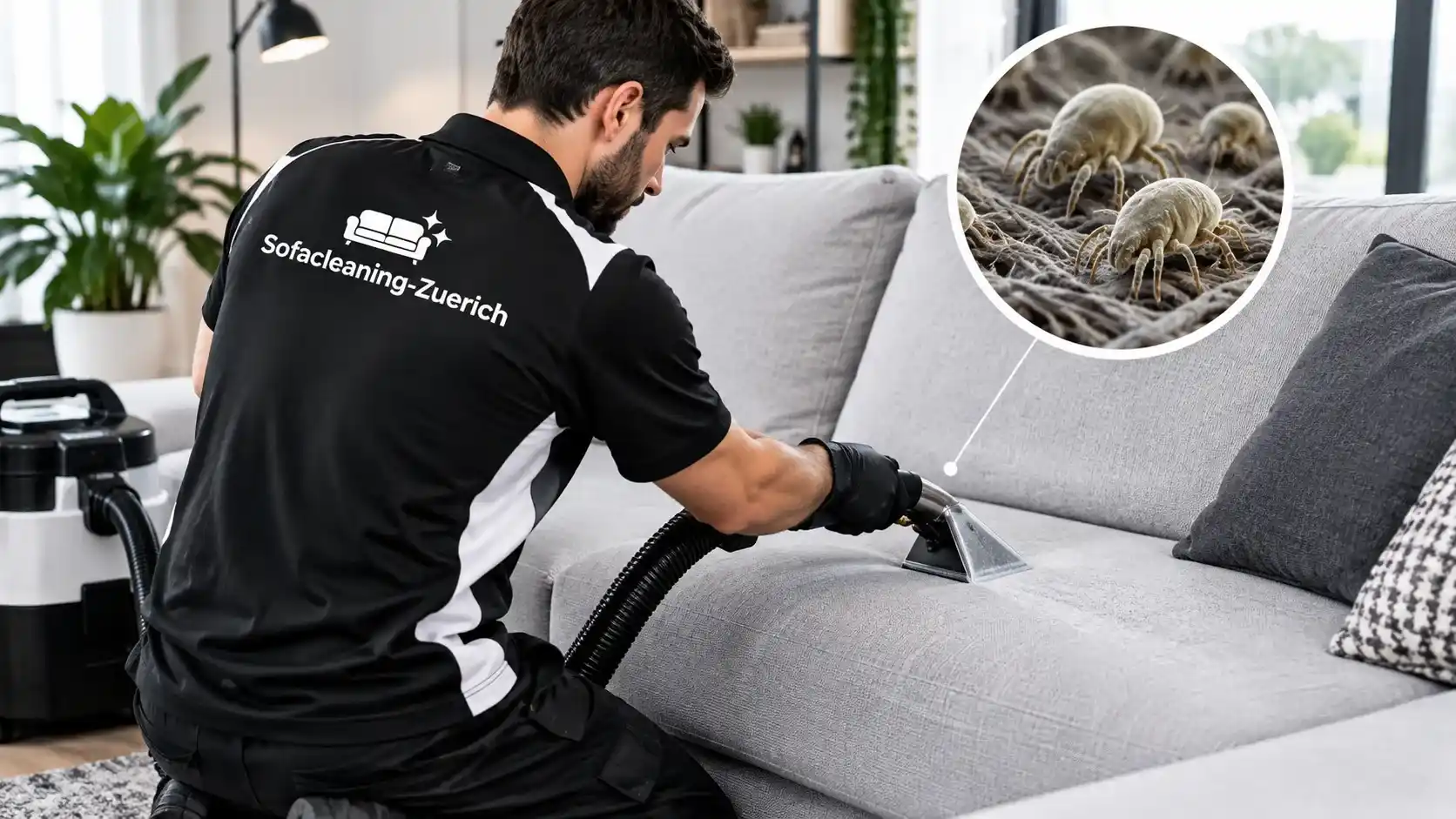
A parent in Kreis 11, Oerlikon, asked us how her family's fabric sofa could still trigger sneezing after weekly vacuuming. The sofa looked clean, but dust mites live deep in the fibres, not on the surface, which is exactly where a household vacuum struggles to reach.
Dust mites come up in almost every conversation about sofa hygiene, yet most households only have a vague idea of what they are or what actually reduces them. Our upholstery cleaning service treats this as a factual, practical problem rather than a mystery.
This guide explains what dust mites are, why sofas are one of their preferred habitats, and which cleaning approaches genuinely reduce them. Results always depend on the material, age, and level of soiling of the upholstered item, and cleaning demonstrably reduces dust mites and allergens rather than eliminating them permanently.
|
Dust mites are microscopic organisms that thrive in warm, humid fabric and feed on shed skin cells, making sofas one of their preferred habitats. They multiply fastest above 50 percent humidity. Hot steam above roughly 54 degrees Celsius kills dust mites on contact, while regular HEPA vacuuming removes some allergen buildup between deeper cleans. No single method eliminates them permanently. |
What Dust Mites Are and Why Sofas Attract Them
Dust mites are microscopic organisms, related more closely to spiders and ticks than insects, that feed on shed human and pet skin cells. They do not bite, but the proteins in their waste and body fragments are a common household allergen trigger for sensitive individuals.
Sofas suit dust mites particularly well because fabric fibres hold warmth, trap moisture from normal humidity and body heat, and collect a steady supply of skin cells from daily sitting. A household vacuum only reaches the surface, leaving the deeper fibres largely undisturbed.
A named entity worth knowing here is relative humidity, the amount of moisture in the air compared with what the air can hold at a given temperature, which is the single biggest factor in how fast dust mites multiply in upholstery.
Leather and pigmented leather sofas are naturally less hospitable to dust mites than fabric, since the surface holds far less moisture and offers fewer fibres for mites to burrow into, though leather still needs its own care routine.
Why Humidity and Warmth Drive Dust Mite Build-Up
Dust mites multiply fastest when indoor relative humidity stays above 50 percent for sustained periods, since they absorb moisture from the air rather than drinking water directly. Below roughly 50 percent humidity, their numbers decline naturally over time.
Warmth speeds this process further. A sofa in a warm, poorly ventilated room, especially one that sees daily sitting use from people or pets, provides close to ideal conditions: steady warmth, adequate humidity, and a constant supply of skin cells.
According to the aha! Swiss Allergy Centre, house dust mite allergens build up in soft furnishings such as sofas, which is one practical reason ventilation and humidity control matter alongside cleaning itself.

Zürich's climate brings genuinely humid stretches across the year, particularly in older buildings with less consistent ventilation, which is one reason local households often see dust mite issues even with regular vacuuming.
|
Dust mites multiply fastest above 50 percent indoor relative humidity, so ventilation and humidity control genuinely help alongside cleaning. |
Which Cleaning Methods Actually Reduce Dust Mites
Hot steam penetrates deep into the fibres and noticeably reduces dust mites and bacteria, without harsh chemicals, since heat above approximately 54 degrees Celsius kills mites on contact. This is the most effective single step for an existing sofa, though it needs to be repeated periodically rather than done once.
Regular vacuuming with a HEPA-filter attachment removes some surface allergen buildup between professional cleans, but a household vacuum's suction rarely disturbs mites embedded deep in the fibres the way steam or spray extraction does.
Dry foam cleaning sits in between: it uses less moisture than steam, so it reaches somewhat less deeply, but still disturbs and removes more embedded allergen than vacuuming alone, making it a reasonable option for fabrics that tolerate steam less comfortably.
Spray extraction offers similar depth to steam with slightly less moisture, landing between the two as an option that still reaches well beyond what home vacuuming can achieve on its own for most fabric sofas.
Cleaning Method Effectiveness Against Dust Mites
|
Method |
Effectiveness vs Dust Mites |
Approx. Drying Time |
Depth Reached |
|
Steam cleaning |
High (kills on contact above ~54°C) |
3-6 hours |
Deep, into the fibres |
|
Spray extraction |
Moderate to high |
3-6 hours |
Deep, slightly less than steam |
|
Dry foam cleaning |
Low to moderate |
1-2 hours |
Near-surface |
|
HEPA vacuuming (DIY) |
Low |
None |
Surface only |
Practical Steps That Genuinely Help Between Cleans
Keeping the room around a sofa well ventilated and, where practical, below 50 percent indoor humidity genuinely slows dust mite reproduction, since moisture is their primary requirement to survive and multiply.
Washing removable cushion covers and any sofa throws regularly in hot water addresses the fabric layers that sit in the most direct, prolonged contact with skin. Sunlight and fresh air on cushions, where feasible, also help reduce humidity locally.
Avoiding excess soft clutter directly on or around the sofa, such as piles of extra cushions or blankets that are rarely washed, removes additional surfaces where dust and mites can accumulate undisturbed between cleanings.
Setting Realistic Expectations for Dust Mite Reduction
For the family in Kreis 11, Oerlikon, we recommended a professional steam clean followed by a shorter 6-month cleaning interval given their household's daily use and the family's sensitivity to household allergens. A single clean reduces mite levels at that moment, but ongoing use means levels build up again over time.
No cleaning method eliminates dust mites permanently from a sofa in daily use, since new skin cells and humidity are introduced constantly through normal living. The realistic goal is a lower, more manageable baseline through a consistent cleaning schedule rather than a one-time fix.
We never claim that professional cleaning cures allergies or fully removes dust mites forever. What steam cleaning and spray extraction demonstrably do is reduce dust mites and allergens present in the fabric at the time of cleaning.
|
No cleaning method eliminates dust mites permanently from a sofa in daily use. Cleaning demonstrably reduces dust mites and allergens, it does not cure allergies. |
A Simple Maintenance Routine for Lower Dust Mite Levels
Vacuum the sofa weekly with an upholstery attachment, ideally HEPA-filtered, reaching into seams and under cushions where skin cells and dust concentrate. This will not reach deep-fibre mites the way steam does, but it removes surface-level allergen buildup between professional appointments.
Keep the room around the sofa ventilated and avoid letting humidity build up, particularly in smaller Zürich flats where airflow can be limited. Opening windows briefly, even in cooler months, measurably helps.
Book a professional deep clean on a regular schedule, generally every 6 to 12 months for households with children, pets, or known allergy sensitivity, since this is the step that reaches mites embedded deep in the fibres.
|
Vacuum weekly with a HEPA-filtered upholstery attachment, and keep the room around the sofa well ventilated to slow humidity build-up. |
Sofacleaning-Zuerich Offers Allergen-Reducing Cleaning Across Zürich
Sofacleaning-Zuerich serves you directly at home or at the office across Zürich and the surrounding area, from Oerlikon to Wiedikon, Seefeld, and Altstetten. Our steam cleaning and spray extraction methods are chosen specifically because they demonstrably reduce dust mites and allergens in upholstery.
We use eco-friendly, biodegradable cleaning agents suitable for households with children, pets, and allergy sufferers, and we're happy to recommend a realistic cleaning interval based on your household during a free assessment.
If you have questions about reducing dust mites in your sofa in Zürich, contact Sofacleaning-Zuerich for a free assessment.
Conclusion
Dust mites thrive in warm, humid sofa fabric and feed on shed skin cells, making regular cleaning genuinely useful rather than optional for households with children, pets, or allergy sensitivity. Steam cleaning and spray extraction demonstrably reduce dust mites and allergens, though no method removes them permanently from a sofa in daily use.
Prices and results are estimates, depending on material and level of soiling, and are confirmed after a brief assessment or on-site visit. If you have questions about reducing dust mites in your sofa in Zürich, contact Sofacleaning-Zuerich for a free assessment.
|
Sofacleaning-Zuerich serves you across Zürich and the surrounding area. Call or message us on WhatsApp: +41 76 413 61 83. Free quote. |
Frequently Asked Questions
How much does professional dust mite cleaning cost in Zürich?
Sofa cleaning that demonstrably reduces dust mites starts from approx. CHF 150 for a standard sofa, the same as a regular deep clean, since dust mite reduction is a result of steam or spray extraction rather than a separate service. The exact price depends on size, fabric, and soiling, confirmed after a free assessment.
How does steam cleaning actually kill dust mites?
Steam above roughly 54 degrees Celsius kills dust mites on contact as it penetrates into the fabric fibres, while the extraction step removes the mites, their waste, and skin cell debris from the sofa. This combination reduces allergen levels more effectively than vacuuming alone, which only removes surface-level dust.
How often should I clean my sofa to keep dust mites down?
Households with children, pets, or allergy sensitivity generally benefit from professional cleaning every 6 to 12 months, since dust mite levels rebuild between cleans through normal use. Weekly HEPA vacuuming helps manage surface allergen buildup in between, but does not replace a periodic deeper clean.
Does Sofacleaning-Zuerich offer dust mite reduction cleaning across Zürich?
Yes, we serve households across Zürich and the surrounding area, including Oerlikon, Wiedikon, Seefeld, and Altstetten, using steam cleaning and spray extraction that demonstrably reduce dust mites and allergens in upholstery. Call or WhatsApp us to discuss a cleaning schedule suited to your household.
What should I watch out for with humidity and dust mites at home?
Dust mites multiply fastest above 50 percent indoor humidity, so ventilating the room and avoiding excess moisture around the sofa genuinely helps slow their build-up. This does not replace professional cleaning, since humidity control alone will not remove mites already embedded deep in the fabric.