 1ºc,
Cloudy
1ºc,
Cloudy  Monday, 21st September, 2026
Dry Foam or Steam: Choosing the Right Clean for Your Sofa
Dry foam vs steam cleaning for your sofa in Zürich: moisture level, drying time, and fabric fit compared. Free quote: call or WhatsApp +41 76 413 61 83.
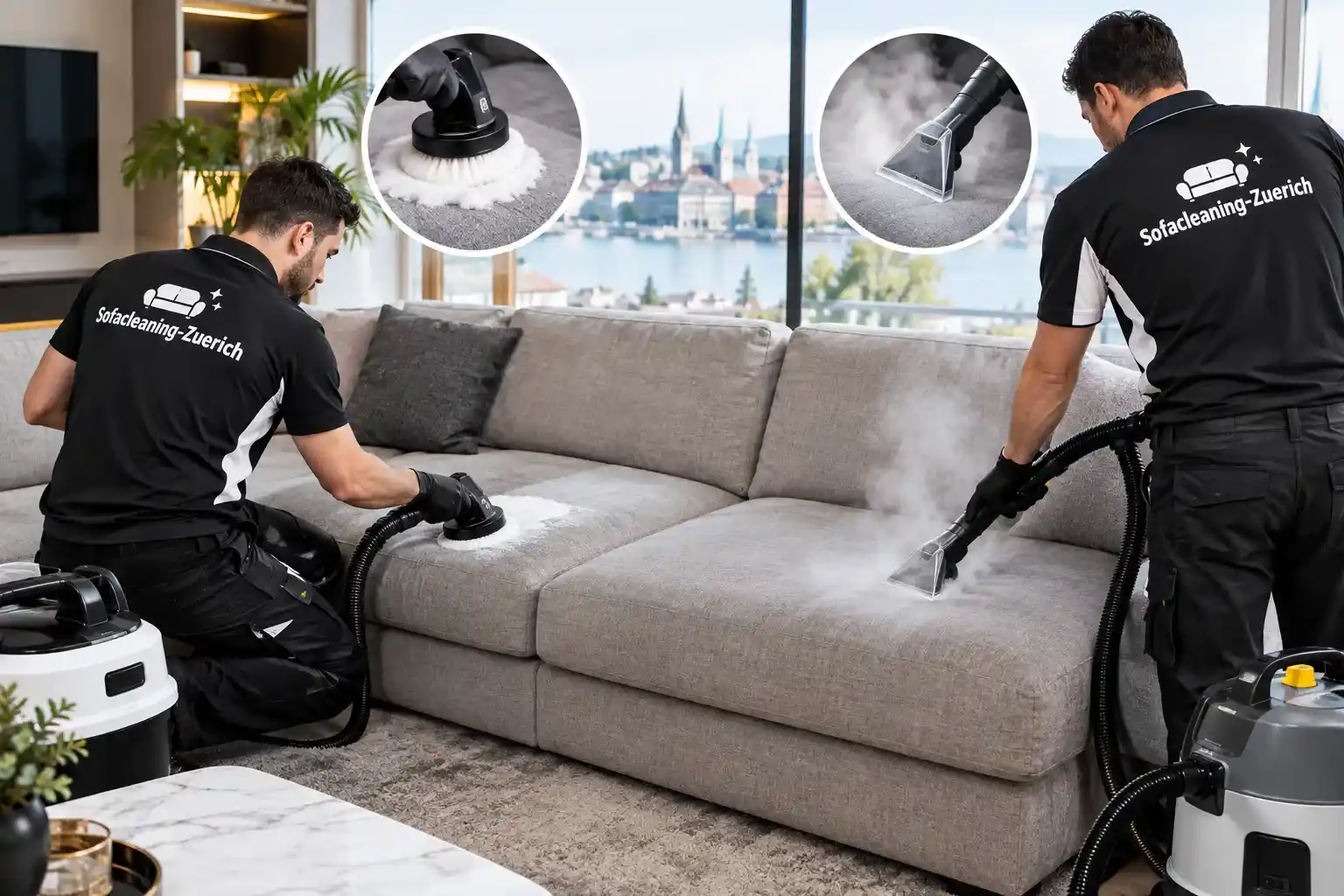
A parent in Kreis 4, Wiedikon, asked us whether her new bouclé sofa could handle steam cleaning after her toddler's allergies flared up. Bouclé's dense, looped texture traps moisture longer than flat fabrics, so we used dry foam on the loops themselves and reserved steam for a lighter pass over the sturdier base fabric underneath.
Dry foam and steam are the two methods people ask us to compare most directly, since both are common and both work, just not for the same situation. Our upholstery cleaning service picks between them based on fabric, moisture tolerance, and how deep a clean the sofa actually needs.
This guide puts dry foam and steam cleaning head to head: moisture level, drying time, allergen removal, and which fabrics suit each one. Results always depend on the material, age, and level of soiling of the upholstered item.
|
Steam cleaning uses more moisture and heat, reaching deeper into the fibres to remove dust mites and bacteria, but takes 3 to 6 hours to dry. Dry foam uses far less moisture, drying in 1 to 2 hours, making it safer for delicate fabrics like bouclé. Steam suits sturdy fabrics; dry foam suits delicate ones. |
What Actually Differs Between Dry Foam and Steam
Dry foam and steam cleaning both remove dirt from upholstery fibres, but they differ in how much moisture and heat they use to do it. Steam injects hot water vapour deep into the fabric before extracting it, while dry foam applies a low-moisture foam that binds to dirt on and near the surface.
You need to know this difference because the wrong choice on the wrong fabric causes real problems: steam on a moisture-sensitive material can leave water rings or a matted texture, while dry foam on a heavily soiled sturdy fabric may not reach deep enough to fully clean it.

A named entity worth knowing here is loop pile, the looped yarn structure found in fabrics like bouclé, which traps moisture longer than a flat weave and is one reason dry foam is often the safer default for these textures.
Neither method is universally 'better'. The right choice depends on what the fabric can tolerate and how deep a clean the soiling actually requires, which is why a technician checks both before deciding.
Steam Cleaning: Deeper Clean, Longer Drying Time
Hot steam penetrates deep into the fibres and noticeably reduces dust mites and bacteria, without harsh chemicals, which makes it the stronger option for allergen reduction. For households managing allergies, this deeper clean can matter more than a faster drying time.
The trade-off is moisture and drying time. Steam-cleaned fabric typically takes 3 to 6 hours to dry, and delicate or loop-pile materials can be left with a slightly matted texture or visible water marks if too much moisture is used or the fabric dries unevenly.
Steam works best on sturdy, flat-weave fabrics such as cotton, polyester blends, and most corduroy, where the deeper clean and longer drying time are an acceptable trade-off for heavier soiling or allergen concerns.
Good ventilation after a steam clean shortens the drying window and reduces the chance of a lingering damp smell, especially in rooms with limited airflow.
|
Hot steam noticeably reduces dust mites and bacteria in upholstery without harsh chemicals, which matters most for allergy-focused households. |
Dry Foam Cleaning: Faster Drying, Gentler on Delicate Fabrics
Dry foam cleaning applies a low-moisture foam that binds to dirt particles at and near the surface, which are then vacuumed away without saturating the fabric. Because so little water is used, drying typically takes just 1 to 2 hours.
This lower moisture level makes dry foam the safer choice for bouclé, wool blends, velour, and other textured or delicate fabrics, where too much water risks matting the pile, causing visible water rings, or weakening the fibres over time.
The trade-off is depth of clean. Dry foam handles surface-level dirt and light staining well, but reaches less deeply into the fibres than steam, so heavily soiled or long-neglected fabric may still need a steam or spray extraction clean afterward.
Dry Foam vs Steam at a Glance
|
Factor |
Steam Cleaning |
Dry Foam Cleaning |
|
Moisture level |
High |
Low |
|
Approx. drying time |
3-6 hours |
1-2 hours |
|
Depth of clean |
Deep, reaches into fibres |
Surface-level and near-surface |
|
Allergen reduction |
Strong |
Moderate |
|
Best suited to |
Sturdy fabrics, heavy soiling |
Bouclé, wool blends, delicate textures |
Why Bouclé and Loop-Pile Fabrics Change the Decision
For the family in Kreis 4, Wiedikon, the bouclé sofa's looped texture was the deciding factor. Wool-rich bouclé absorbs moisture readily and can felt or lose its texture if over-wetted, so dry foam protected the loops while a lighter steam pass handled the sturdier base fabric beneath.
Performance polyester-blend bouclé tolerates a bit more moisture than wool bouclé, but even then, a cautious approach with dry foam as the default and steam only where genuinely needed keeps the risk low across the whole piece.
Velvet and chenille sit in a similar category to bouclé: both have a raised or looped texture that can show flattening or brush marks if steam is used carelessly, so dry foam is often the first choice unless soiling is heavy enough to need a deeper clean.
|
Wool-rich bouclé absorbs moisture readily and can felt or lose its texture if over-wetted. Always check the care label before choosing a method. |
How to Decide Which Method Your Sofa Needs
Choose steam cleaning for sturdy cotton or polyester blend sofas with visible or heavy soiling, or when allergen reduction is the main priority for the household. According to the aha! Swiss Allergy Centre, house dust mite allergens build up in soft furnishings such as sofas, and a deeper clean addresses this more directly than a surface-level one.
Choose dry foam for bouclé, wool blends, velour, chenille, or any fabric where the care label warns against excess moisture, and for a faster-drying refresh when the sofa only has light surface soiling rather than embedded dirt.
When a sofa combines a delicate texture with heavy soiling, a technician may use both: dry foam on the moisture-sensitive sections and a careful, lighter steam pass on sturdier areas, exactly as we did for the Wiedikon bouclé sofa.
Maintenance Habits That Work With Either Method
Vacuum bouclé, velour, or other textured fabrics weekly with a soft, low-suction upholstery attachment, since aggressive vacuuming can pull at loops or pile over time. Blot spills immediately with a clean, dry cloth, pressing straight down rather than rubbing, which can push liquid deeper into a looped texture.
For sturdy flat-weave fabrics, a slightly firmer vacuum attachment is fine, and occasional light blotting with lukewarm water can handle very fresh, small stains between professional appointments.
Whatever the fabric, avoid saturating any upholstery with water at home. A cautious, low-moisture approach between professional visits reduces the risk of the exact problems that make dry foam necessary on delicate materials in the first place.
|
Blot spills immediately with a clean, dry cloth, pressing straight down rather than rubbing, especially on bouclé or other looped textures. |
Sofacleaning-Zuerich Chooses the Right Method Across Zürich
Sofacleaning-Zuerich serves you directly at home or at the office across Zürich and the surrounding area, from Wiedikon to Seefeld, Oerlikon, and Altstetten. Our team carries both steam and dry foam equipment to every appointment, choosing the method based on your specific fabric rather than applying one technique to every sofa.
For bouclé, wool-blend, and other delicate or trending fabrics increasingly common in Zürich living rooms, we check the care label and texture before recommending an approach, using eco-friendly, biodegradable cleaning agents throughout.
If you have questions about dry foam versus steam cleaning for your sofa in Zürich, contact Sofacleaning-Zuerich for a free assessment.
Conclusion
Steam cleaning reaches deeper into the fibres and reduces allergens more thoroughly, but takes longer to dry and carries more risk on delicate, looped, or moisture-sensitive fabrics like bouclé. Dry foam dries faster and protects delicate textures, but does not clean as deeply. The right choice depends on your specific fabric and soiling level.
Prices and results are estimates, depending on material and level of soiling, and are confirmed after a brief assessment or on-site visit. If you have questions about dry foam versus steam cleaning in Zürich, contact Sofacleaning-Zuerich for a free assessment.
|
Sofacleaning-Zuerich serves you across Zürich and the surrounding area. Call or message us on WhatsApp: +41 76 413 61 83. Free quote. |
Frequently Asked Questions
How much does dry foam or steam cleaning cost in Zürich?
Both methods are priced the same way, starting from approx. CHF 150 for a standard sofa, since the method is chosen based on fabric rather than affecting the base price. The exact price still depends on size, fabric, and soiling level, confirmed after a short, free assessment before any work begins.
Is dry foam or steam cleaning better for allergies?
Steam cleaning generally reduces dust mites and allergens more thoroughly, since the heat and deeper moisture penetration reach further into the fibres. Dry foam still removes surface-level allergens but less deeply. For allergy-focused households with sturdy, moisture-tolerant fabric, steam is usually the stronger choice.
How long does each method take to dry?
Steam cleaning typically takes 3 to 6 hours to dry, since more moisture is used to reach deep into the fibres. Dry foam dries in about 1 to 2 hours because it uses far less water. Bouclé and other looped or textured fabrics may need extra ventilation time regardless of the method used.
Does Sofacleaning-Zuerich offer both methods across Zürich?
Yes, our team brings both steam and dry foam equipment to every appointment across Zürich and the surrounding area, including Wiedikon, Seefeld, Oerlikon, and Altstetten. We choose the method, or a combination of both, based on your fabric during the assessment rather than using one technique for every sofa.
What should I watch out for with bouclé or other textured fabrics?
Bouclé and similar looped fabrics trap moisture longer than flat weaves and can matt, felt, or show water marks if over-wetted, so dry foam is usually the safer default. Wool-rich bouclé is more sensitive than polyester-blend versions. Always check the care label, and ask for a professional assessment if you are unsure.