 1ºc,
Cloudy
1ºc,
Cloudy  Monday, 21st September, 2026
When DIY Upholstery Cleaning Works and When It Does Not
DIY upholstery cleaning vs hiring a professional in Zürich: honest costs, risks, and results explained. Free quote: call or WhatsApp +41 76 413 61 83.
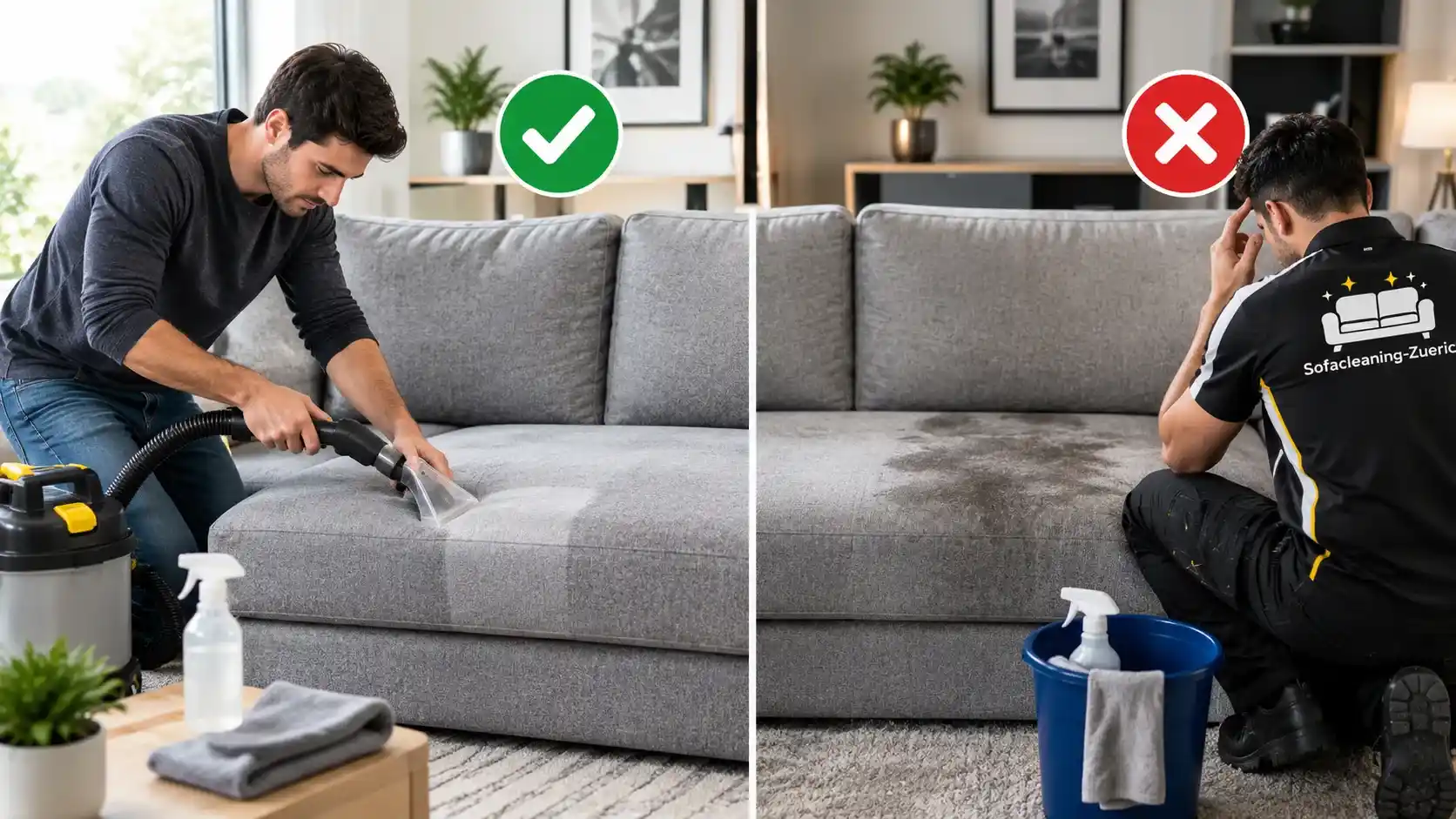
A tenant in Kreis 7, Fluntern, rented a carpet cleaner from a hardware store the week before moving out, hoping to freshen up the landlord's fabric sofa before the handover inspection. The sofa looked fine at first, but two days later a faint musty smell appeared, since the fabric had not fully dried through.
That outcome is common with DIY upholstery cleaning. Our upholstery cleaning service gets called in fairly often to fix the aftermath of a well-intentioned rental-machine attempt, especially before a Zürich flat handover where the stakes are higher.
This guide compares DIY and professional upholstery cleaning honestly: what DIY handles reasonably well, where it tends to go wrong, and how the real costs compare once everything is accounted for. Results always depend on the material, age, and level of soiling of the upholstered item.
|
DIY upholstery cleaning works reasonably well for light surface dirt and fresh, small stains on sturdy fabrics. Rental machines cost about CHF 40 to 70 per day but have weaker suction, leaving drying times of 12 to 24 hours, which raises the risk of mould. Professional cleaning from approx. CHF 150 dries faster and reaches deeper into the fibres. |
What Actually Differs Between DIY and Professional Cleaning
DIY upholstery cleaning means renting or buying a consumer-grade extraction machine and cleaning the sofa yourself, as opposed to booking a professional visit with commercial equipment. The core difference is suction power and heat, which determine how much moisture and dirt actually come back out of the fabric.
You need to know this distinction because a weaker machine leaves more moisture and dirt behind than it appears to. The sofa can look clean and smell fine right after DIY cleaning, only for a musty smell to develop a day or two later as the trapped moisture sits in the fibres.

A named entity worth knowing here is dwell time, the amount of time cleaning solution and moisture stay in the fabric before extraction, which consumer machines control far less precisely than professional equipment.
This is separate from the question of skill. Even a careful DIY attempt is limited by the machine's suction and heat, not just by technique, which is why the same effort can produce very different results with rental versus commercial equipment.
Comparing the Real Costs, Including What Gets Overlooked
Renting a carpet and upholstery machine in Zürich typically costs approx. CHF 40 to 70 per day, plus CHF 15 to 25 for cleaning solution, bringing a DIY attempt to roughly CHF 55 to 95 in direct costs for a single sofa.
Professional sofa cleaning starts from approx. CHF 150, which looks more expensive on paper, but includes commercial-grade suction, faster drying, and no risk of a wasted rental day if the result falls short. There is also no time cost for driving to collect and return a rental machine.
For a single stain or light annual refresh on a sturdy fabric, the direct cost gap is real. For a heavily soiled sofa, delicate material, or a flat handover deadline, the total cost of a DIY attempt gone wrong, including a possible professional fix afterward, often exceeds booking a professional from the start.
Time is worth factoring in too. Collecting and returning a rental machine, moving furniture, and cleaning thoroughly can easily take half a day, compared with roughly an hour of a technician's time for the same sofa.
DIY vs Professional at a Glance
|
Factor |
DIY Cleaning |
Professional Cleaning |
|
Approx. cost (single sofa) |
CHF 55-95 (rental + solution) |
From approx. CHF 150 |
|
Drying time |
12-24 hours |
3-6 hours |
|
Suction / heat power |
Consumer-grade, weaker |
Commercial-grade, stronger |
|
Best suited to |
Light surface dirt, sturdy fabrics |
Deep dirt, stains, delicate fabrics, leather |
|
Risk level |
Higher: mould, colour bleeding, water marks |
Low, with an honest pre-assessment |
Where DIY Cleaning Actually Works Reasonably Well
DIY cleaning handles light, fresh surface dirt reasonably well on sturdy cotton or polyester blend fabrics, particularly for a quick refresh between deeper professional cleans. Blotting a fresh spill immediately, whether by hand or with a rental machine, usually prevents it from setting further.
Hot steam penetrates deep into the fibres and noticeably reduces dust mites and bacteria, a result consumer machines rarely match, since they run cooler and extract less thoroughly. For genuine allergen reduction rather than surface freshening, professional equipment has a real, measurable advantage.
Routine, light maintenance is where DIY earns its lower price. Deep, embedded dirt, allergens, or old stains generally need the heat and suction that only commercial equipment provides.
|
Hot steam noticeably reduces dust mites and bacteria in upholstery without harsh chemicals, a result consumer rental machines rarely match. |
Where DIY Cleaning Carries Real Risk
Leather, velvet, silk-blend, and other delicate fabrics carry real risk with DIY equipment, since generic rental machines are built for sturdy synthetic fabrics and can strip finishes, cause colour bleeding, or leave permanent water marks. Leather sofas are not steamed like fabric upholstery; instead they need pH-neutral, leather-safe products applied correctly.
Deep-set stains and odors, such as old pet accidents, often look improved right after a DIY clean simply because the fabric is wet and the smell is temporarily masked. The underlying residue frequently remains and the odor returns once the fabric dries.
Slow drying is the most common source of DIY damage. Consumer machines typically leave fabric taking 12 to 24 hours to dry, compared with 3 to 6 hours after professional extraction, and that longer damp window raises the real risk of mould or a lingering musty smell.
|
Slow drying is the most common source of DIY damage. A longer damp window raises the real risk of mould or a lingering musty smell. |
Why This Matters More Before a Zürich Flat Handover
The tenant in Kreis 7, Fluntern, called us once the musty smell appeared, worried the landlord would deduct cleaning costs from the deposit regardless. Professional spray extraction fully dried the sofa within hours and resolved the odor, though a fresh DIY attempt on the same spot might have made the underlying moisture problem worse rather than better.
Property managers and landlords across Zürich sometimes reject a DIY cleaning result during a handover inspection specifically because of a lingering odor or visible water marks, which can cost a tenant more in the end than booking a professional the first time.
We never guarantee that a professional visit can fully undo prior DIY damage, such as colour bleeding or a permanently set stain. An honest assessment during the free quote sets realistic expectations before any work begins.
How to Decide Between DIY and Professional Cleaning
Choose DIY for a quick, light refresh on a sturdy fabric sofa with no delicate materials, no deep stains, and no looming handover deadline. It works reasonably well as routine upkeep between professional appointments, not as a replacement for them.
Choose a professional for leather, velvet, or other delicate materials, for stains that have already dried in, for allergy-focused deep cleaning, or whenever a flat handover or important deadline leaves no room for a slow-drying mistake.
When in doubt, a short assessment during a free quote settles the question. We can tell you honestly whether your specific sofa and stain are DIY-friendly or better left to professional equipment.
|
If you're unsure whether DIY is safe for your fabric, ask for a quick, honest opinion before renting a machine. It costs nothing and can save a wasted rental day. |
Sofacleaning-Zuerich Offers an Honest Assessment Across Zürich
Sofacleaning-Zuerich serves you directly at home or at the office across Zürich and the surrounding area, from Fluntern and Hottingen to Wiedikon, Seefeld, and Altstetten. Our team brings steam cleaning, spray extraction, and eco-friendly, biodegradable cleaning agents suited to households with children, pets, and allergy sufferers.
For tenants facing a flat handover, we understand the deposit is often on the line, and we work to a schedule that leaves the sofa fully dry and ready well before an inspection date wherever possible. If you have questions about DIY versus professional upholstery cleaning in Zürich, contact Sofacleaning-Zuerich for a free assessment.
Conclusion
DIY upholstery cleaning can work for light, routine refreshing on sturdy fabrics, but it carries real risk on delicate materials, deep-set stains, and slow drying times that can lead to mould or a lingering odor. Professional cleaning costs more upfront but reduces that risk substantially, especially before a flat handover.
Prices and results are estimates, depending on material and level of soiling, and are confirmed after a brief assessment or on-site visit. If you have questions about DIY versus professional upholstery cleaning in Zürich, contact Sofacleaning-Zuerich for a free assessment.
|
Sofacleaning-Zuerich serves you across Zürich and the surrounding area. Call or message us on WhatsApp: +41 76 413 61 83. Free quote. |
Frequently Asked Questions
How much does professional upholstery cleaning cost compared to DIY?
Renting a machine in Zürich costs approx. CHF 40 to 70 per day plus CHF 15 to 25 for solution, around CHF 55 to 95 total. Professional cleaning starts from approx. CHF 150 per sofa, higher upfront but with less risk of a wasted attempt or a follow-up professional fix, confirmed after a free assessment.
How does professional cleaning actually work better than a rental machine?
Commercial equipment uses stronger suction and controlled heat, extracting far more moisture and dirt than a consumer machine. Hot steam penetrates deep into the fibres and reduces dust mites and bacteria more effectively, while faster extraction leaves the sofa drier immediately afterward, lowering the risk of mould or lingering odors.
How long does DIY cleaning take to dry compared to professional cleaning?
DIY rental machines typically leave fabric taking 12 to 24 hours to dry, since they extract less moisture than commercial equipment. Professional spray extraction or steam cleaning usually dries within 3 to 6 hours. That longer DIY drying window is the most common reason a musty smell or mould risk develops afterward.
Does Sofacleaning-Zuerich fix sofas after a DIY cleaning attempt?
Yes, we serve households across Zürich and the surrounding area, including Fluntern, Hottingen, Wiedikon, and Seefeld, and often help after a DIY attempt has left a lingering odor or slow-drying fabric. We cannot always fully undo prior damage such as colour bleeding, but an honest assessment tells you what is realistic.
What should I watch out for before trying DIY on leather or delicate fabrics?
Leather, velvet, and silk-blend fabrics risk permanent damage from generic rental machines, since they are built for sturdy synthetic fabrics rather than delicate materials. Leather especially should never be steamed. If your sofa is delicate or a stain has already dried in, a professional assessment first is the safer option.